


Brexu-cel CAR-T Therapy Shows Promising Results in Adult R/R B-ALL Patients
Brexucabtagene autoleucel (brexu-cel), a CD19 CAR-T cell therapy, has become a significant treatment option for relapsed/refractory (R/R) B-cell acute lymphoblastic leukemia (B-ALL) in adults. Building on the outcomes of the ZUMA-3 trial, brexu-cel received approval in the United States for adult patients with R/R B-ALL. However, real-world studies are essential to fully understand its efficacy and safety in clinical practice. A recent large-scale study published in the Journal of Clinical Oncology provides key insights into brexu-cel’s performance across a broader patient cohort, revealing encouraging results in remission rates and survival.
Study Overview
This multi-center study involved 204 adult patients with R/R B-ALL who were treated outside of clinical trials at 31 medical centers in the United States. A total of 189 patients successfully received brexu-cel, with a median of four prior lines of therapy. Nearly half of the patients had previously undergone hematopoietic stem cell transplantation (HSCT), 59% had received blinatumomab, and 48% had been treated with inotuzumab ozogamicin. At the time of leukapheresis, 42% of patients were in morphological remission, a criterion that would have excluded them from the original ZUMA-3 trial.
Key Findings
Following a median follow-up of 11.4 months, the study results demonstrated substantial efficacy for brexu-cel in treating R/R B-ALL:
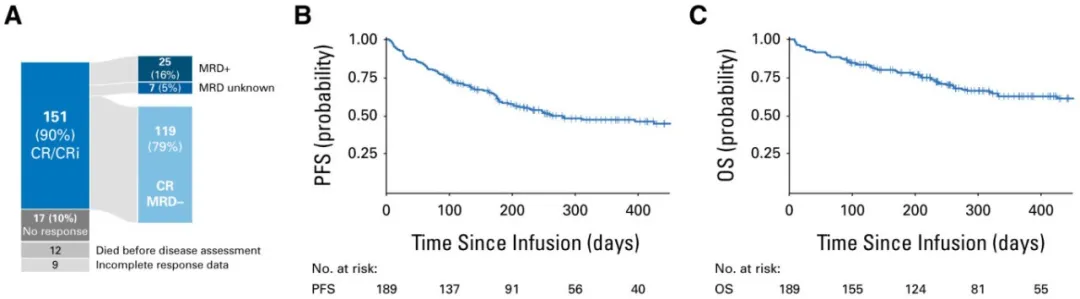
- Complete Response (CR): 90% of the treated patients achieved complete response, with 79% showing minimal residual disease (MRD)-negative remission.
- Progression-Free Survival (PFS): The median PFS was 9.5 months.
- Overall Survival (OS): Median OS was not reached, suggesting a potentially durable effect in extending patient survival.
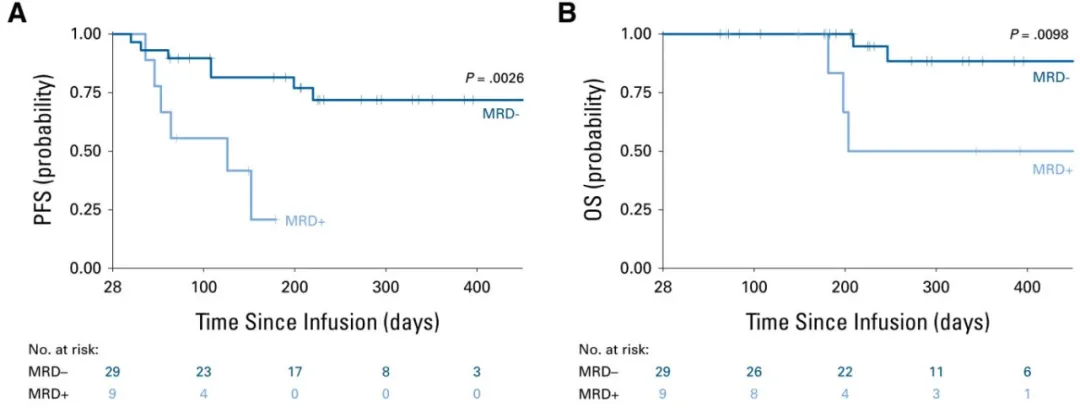
- MRD Negativity: For patients whose MRD was assessed using the clonoSEQ next-generation sequencing, MRD negativity at day 28 was associated with improved PFS and OS, reinforcing the value of MRD as a prognostic indicator.
Impact of Consolidation Therapy
The study further found that patients who received consolidative HSCT following brexu-cel treatment had a markedly better PFS compared to those who did not undergo any consolidation or maintenance therapy. In a multivariate analysis, HSCT (performed in 30 patients) post-CAR-T therapy was associated with a significantly reduced risk of disease progression (HR=0.34).
Safety Profile
Despite its efficacy, brexu-cel treatment presented notable adverse events, which are important considerations in clinical management:
- Cytokine Release Syndrome (CRS) and Neurotoxicity (ICANS): CRS was reported in 84% of patients, with severe cases (grade 3-4) in 11%. ICANS occurred in 56% of patients, with severe cases in 31%.
- Mortality and Non-Relapse Deaths: Thirty-four percent of patients died during the study, with 13% of deaths unrelated to leukemia progression. Ten patients died within the first 28 days post-treatment due to toxicity or infections, particularly among those with high disease burden. Fungal infections were the most common cause of infection-related deaths, indicating the need for vigilant infection management.
Conclusion
The findings of this real-world study echo the ZUMA-3 trial results, confirming brexu-cel’s high rates of MRD-negative CR and favorable survival outcomes for adult R/R B-ALL patients. However, significant toxicities, particularly severe ICANS and early mortality, highlight the importance of risk mitigation strategies, including infection prevention and close monitoring. Additionally, the use of consolidative HSCT post-CAR-T therapy was shown to improve progression-free survival, offering a potential pathway to optimize patient outcomes.
This study underscores brexu-cel’s role as a standard treatment in adult R/R B-ALL while emphasizing ongoing challenges in managing its adverse effects.